Septic Tank Pumping for Homeowners
Request an estimate first
Say you come home and the shower drains slowly, the toilet gurgles, and the grass over the tank smells sour. That is often a sign the tank is full. Septic tank pumping removes the built-up sludge and scum so wastewater can flow again and the drainfield stays protected.
Outprovided Septic is a referral service. It does not pump tanks. It connects homeowners in Economy and the Economy area with independent local providers who handle the work. Start with an estimate request, then use a phone call as backup. Share a few photos and notes, and a provider can give you a clearer written quote. Call hours vary by provider, so availability is worth checking early. This page walks you through the first hour, what a visit looks like, and what to ask before you agree to anything.
Tank Full or Overdue? Start Here
Say you come home and the shower drains slowly. The toilet gurgles when the washer runs. Out in the yard, one patch of lawn smells sour. Take a breath. These are common signs of a tank that needs pumping, and there are calm steps you can take right now.
The First Hour: Pause the Water
Pause the water first. Every drop you send down goes into a tank that may already be full. Little steps help a lot.
- Hold off on laundry, dishes and long showers.
- Keep toilet flushes to a minimum.
- Keep children and pets off soggy or smelly ground.
- Leave the tank lid closed. Gases inside can be dangerous.
Snap, Note, Ask
Next, get your paperwork ready. Snap, note, ask. A provider can quote more clearly when you share details.
- Snap photos of the slow drain, the wet spot and the lid area.
- Note when it started, which fixtures act up, and how many people live in the home.
- Ask yourself when the tank was last pumped, then dig out any old receipts.
Estimate first. It keeps everything in one place.
Signs You Should Not Wait
Some signs mean the tank is close to its limit. Watch for these:
- Drains that run slow in more than one room
- Gurgling pipes after flushing
- A sewage smell near the tank or the house
- Standing water or a very green, lush strip over the tank or drainfield
If you notice two or more, request an estimate soon. Waiting can push solids toward the drainfield, and drainfield repair costs far more than a routine pump.
When Sewage Is Inside the Home
Say you walk into the basement and find dirty water at the floor drain. Older homes with full basements see this often, because the drain sits low. Stay out of the water. Keep the area ventilated and keep the family away from it. Ask providers about emergency septic cleaning. Availability varies, so Request a callback to check provider availability.
Why Regular Pumping Matters
Inside the tank, heavy solids sink and light scum floats. Clear water sits in the middle and flows out to the drainfield. Over time the solids layer grows. If it grows too far, solids slip out and clog the soil. Regular septic tank pumping is the simple way to prevent that.
How Often Should You Pump?
Many households pump every three to five years. Your number depends on tank size, how many people live in the home, and whether you use a garbage disposal. A busy multi-family home or a small tank in an older Cape Cod style house may need pumping sooner. A provider can suggest a schedule after looking at your tank.
Timing Around Cold Weather
Cold, snowy winters change the picture. Frozen ground can make lids hard to reach. Spring snowmelt can saturate the soil and slow the drainfield. Many homeowners schedule pumping in fall or after the thaw, so the tank starts the hard season with room to spare.
What Happens During a Pumping Visit
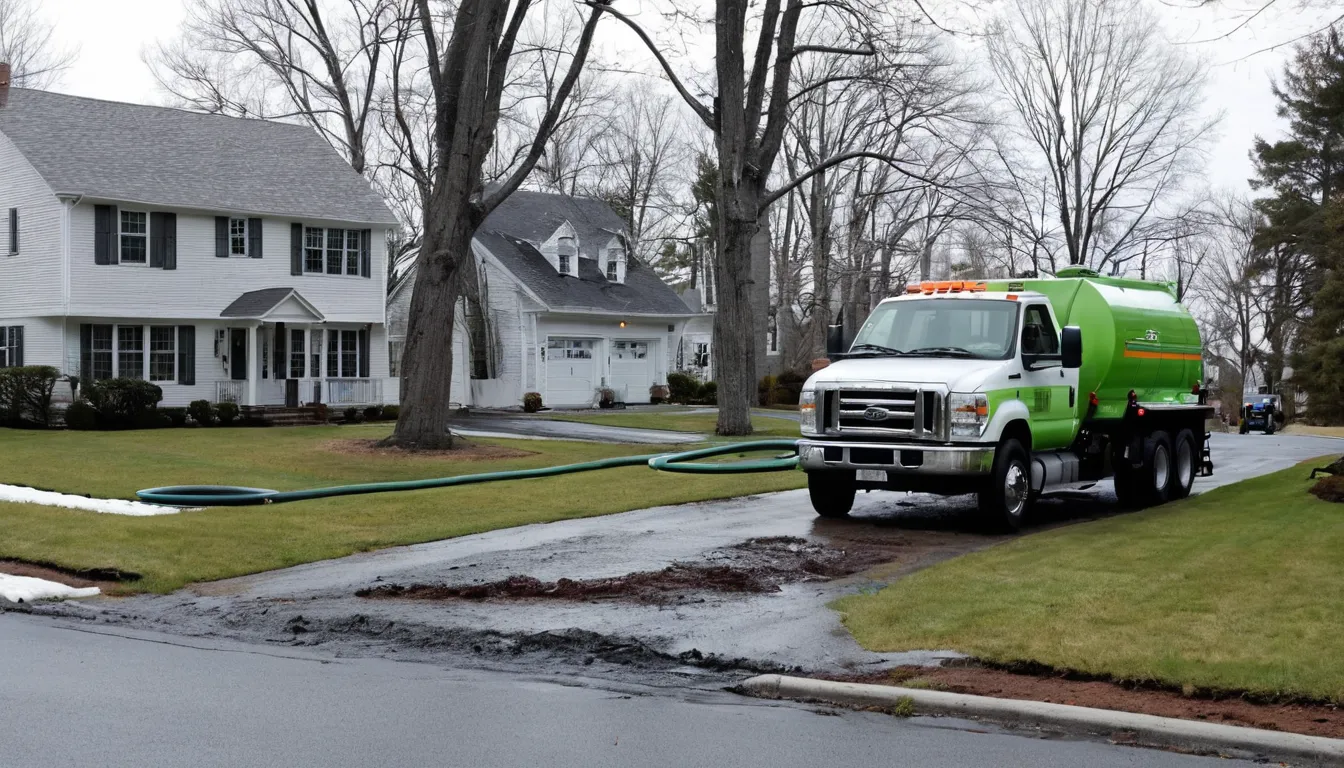
Say a provider pulls up to your home. They find the tank, open the lid and pump out the contents. Then they look at the inside walls, the baffles and any filter. Many will point out cracks, roots or standing water they notice. Ask for notes or photos of what they see, and keep them with your records.
Pumping and Inspections
Pumping and inspecting often go together. An empty tank is easier to check. A provider can see whether the tank holds water, whether the baffles are in place, and whether the drainfield looks stressed. If something looks wrong, you get a written quote for the next step before any repair begins.
Buying or Selling a Home With a Septic System
Say you are selling a house. A buyer asks when the tank was last pumped. A dated receipt answers that in seconds. Buyers often ask for an inspection with pumping, and sellers can head off surprises by doing it early. Keep the report in a folder with your other home records.
Caring for Your System Between Pumpings
Small habits protect the tank:
- Spread laundry across the week.
- Flush only toilet paper and waste.
- Keep grease, wipes and coffee grounds out of the drain.
- Keep cars and heavy equipment off the drainfield.
If You Also Use a Well
Some homes have a septic tank and a private well on the same lot. If a backup happens and your tap water looks cloudy or smells off, do not drink it until it is tested. Ask a provider about water well service and testing.
Questions to Ask the Provider
Before you agree, ask:
- What is the total price, and what does it include?
- How big is the tank, and how will you find it?
- Will you check the baffles and filter?
- Can I get notes or photos from the visit?
- What extra charges could come up?
Get the answers in a written quote. That quote, your photos and your notes make a tidy record for later, including any conversation with your insurer.
What's Included
Full Pumping
A provider removes sludge and scum from the tank so wastewater can move on to the drainfield.
Tank Check
Providers often look at the lid, baffles and walls while the tank is empty.
Filter Cleaning, If Present
If your tank has an effluent filter, a provider can often clean it during the visit.
Visit Notes
Ask for notes or photos of what the provider found, so your records stay complete and handy.
Typical Septic Pumping Cost Ranges
Prices vary by tank size, access, location and the season. These are typical U.S. ranges, not quotes. Ask each provider for a written estimate that lists everything before work starts.
| Item | Typical range | Notes |
|---|---|---|
| Routine pumping, 1,000-gallon tank | $300 – $600 | Common for smaller homes |
| Larger tank, 1,500 gallons or more | $450 – $900 | Cost rises with volume |
| Emergency septic cleaning | $500 – $1,000 | Varies with provider and timing |
| Locating a buried tank | $100 – $350 | Needed if the lid is not marked |
| Digging out or adding a riser | $300 – $900 | Makes later visits easier |
| Filter cleaning | $75 – $250 | Only for tanks with a filter |
How It Works
Pause the Water
Hold off on laundry, dishes and long showers so the tank does not take on more water.
Snap and Note
Take photos of drains and wet spots, then write down when the trouble started.
Request an Estimate
Send your details, and a provider in our network can reach out with a written quote.
Keep the Paperwork
Save the quote, the visit notes and any photos so you know when the tank was last pumped.
Why Call Outprovided Septic
Estimate First
Send your request and photos online, then compare written quotes from independent local providers at your own pace.
Local Providers
Providers in our network know area soil, cold winters and older home layouts.
Organized Records
Photos, notes and receipts stay together, which helps when comparing quotes and talking with insurers.
No Obligation
Requesting an estimate carries no obligation, and you decide which provider to hire.
Other Services
Need septic tank pumping in Economy?
Send a few details through the estimate form or email contact@outprovided.garden. A provider in our network can follow up with next steps and a written quote.
No obligationSeptic Tank Pumping FAQ
How do I know if my septic tank needs pumping?
Slow drains, gurgling pipes, sewage smells, and soggy or very green ground over the tank are common signs. If you notice more than one, request an estimate and ask a provider to inspect.
How often should a septic tank be pumped?
Many households pump every three to five years. Tank size, household size and garbage disposal use all matter, so a local provider can suggest a schedule for your home after checking the tank.
What should I do before the pumping visit?
Pause heavy water use, make sure the provider can reach the lid, and gather past receipts. Photos and notes about symptoms also help a provider write a clear quote.
Request a callback
Send a few details through the estimate form or email contact@outprovided.garden. A provider in our network can follow up with next steps and a written quote.
No obligation